How Often to Water Succulents
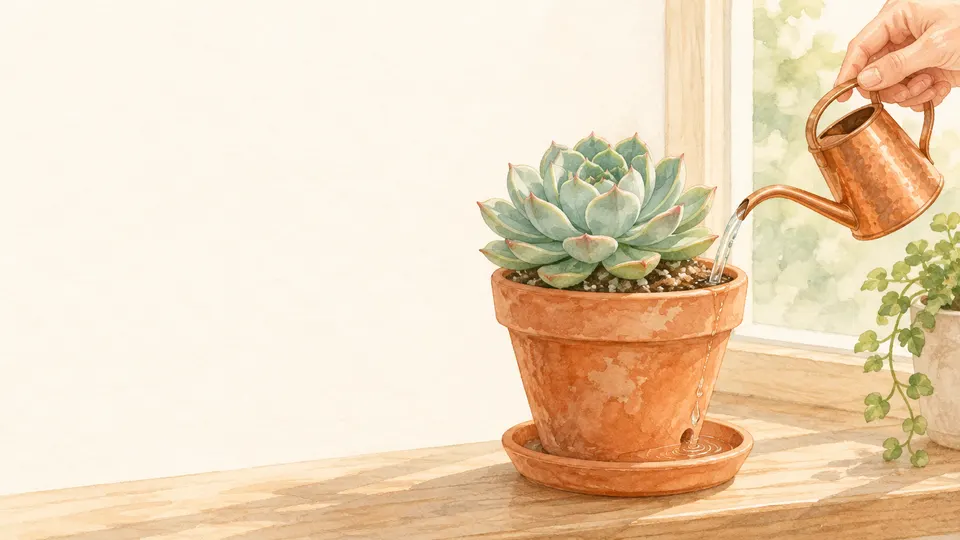
Quick Answer
Check succulents about every 2 to 3 weeks and water only when the soil is dry several inches down. Then soak the pot until water drains and empty the saucer. Water more often during active growth (March to October in the Midwest) and no more than once a month in winter. Light, pot, soil, and temperature all change the timing, so let the soil decide.
On this page
- How Often Should You Water Succulents?
- How Should Watering Change Through the Year?
- How Can You Tell When a Succulent Needs Water?
- How Should You Water a Succulent?
- What Do Overwatered and Underwatered Succulents Look Like?
- How Do Pots, Lights, Location, and Species Change Watering?
- Frequently Asked Questions
- Our Take
- Sources
Key Takeaways
- There is no fixed schedule: start by checking about every 2 to 3 weeks and water only when the soil is dry several inches down.
- Water more often during active growth (March to October in the Midwest) and no more than once a month in winter, and Illinois Extension suggests perhaps only a couple of waterings all winter.
- Soak the whole root ball until water drains, then never leave water standing in a saucer or outer pot for more than a few hours.
- Terracotta, small pots, full sun, gritty soil, and moving air dry faster; oversized pots, fine soil, and filtered light stay wet longer.
- A shriveling succulent in wet soil may have root rot, which mimics thirst. Check the soil before adding water.
How Often Should You Water Succulents?
Start by checking about every 2 to 3 weeks, and water only when the soil is dry. Iowa State Extension suggests starting with watering every 2 to 3 weeks, but only after you confirm the soil is dry several inches down [1]. Illinois Extension gives the same general range of every two to three weeks [5], and Missouri Botanical Garden recommends checking soil moisture at that interval [3].
Treat 2 to 3 weeks as a check-in interval, not a fixed watering day. Illinois Extension says succulents can't be watered on a set schedule. Their needs change with the time of year, the size of the plant, the potting soil, and the size of the pot, and watering regardless of conditions can easily lead to overwatering [4]. Light, container type, temperature, and humidity matter too [1], and so does air circulation [5].
Here is a hypothetical example. You check a small terracotta pot after two weeks and the chopstick comes out dark, so you wait a few days and check again. Next time it comes out clean, so you water. The interval stretched, and that is the point: the soil decides.
For light, soil, and feeding, see our succulent care guide for beginners.
What Makes the Soil Dry Faster or Slower?
| Factor | Effect on drying | Source |
|---|---|---|
| Pot material | Clay and terracotta are porous and let the soil dry more quickly | Iowa State; Illinois (2024) |
| Pot size | Small or shallow pots dry out more quickly; overly large pots take longer | Iowa State |
| Light | Plants in full sun dry out more quickly than plants in filtered light | Missouri Botanical Garden |
| Soil | Sharp-draining mix dries quickly; typical potting soil, or soil that is too organic or fine-textured, holds too much water | Iowa State |
| Air and humidity | Moving air and the low humidity of most homes help the soil dry | Iowa State |
| Season | Plants use more water during active growth; winter is a slow-growth period, so water no more than once a month | Missouri Botanical Garden |
The table draws on Iowa State Extension [1] [2], Missouri Botanical Garden [3], and Illinois Extension [5]. Iowa State calls soil one of the most important considerations for succulents [1]; see the best soil for succulents for mixes.
How Should Watering Change Through the Year?
Water more in the growing season and much less in winter. Cacti and succulents should be watered more frequently during their period of greatest growth, which runs from March to October in the Midwest. In winter, a slow growth period, water no more than once per month, because overwatering then leads to root rot by fungal organisms [3]. Succulents go dormant in winter and can be watered even less, "perhaps only a couple of times," according to Illinois Extension [5].
| Season | What the sources say | A practical approach |
|---|---|---|
| Spring (March to May) | Active growth begins in March in the Midwest; water more often than in winter [3] | Check every 2 to 3 weeks and water when dry several inches down |
| Summer (June to August) | Still active growth [3]; pots can go outdoors, moved gradually into more sun [5] [4], and plants in full sun dry faster [3] | Check pots in full sun sooner |
| Fall (September to October) | Active growth continues to October in the Midwest [3]; bring outdoor pots in before temperatures dip below freezing [4] | Keep checking every 2 to 3 weeks |
| Winter (November to February) | No more than once a month [3]; perhaps only a couple of times all winter [5] | Keep checking every 2 to 3 weeks, but water no more than once a month, and only when the soil is completely dry |
The right-hand column is our suggestion based on these sources, not a quoted rule. The March to October window comes from a Midwest fact sheet, so the months may shift where you live; the soil check still decides.
One exception: Christmas, Thanksgiving, and Easter cacti are tropical "jungle cacti." Keep them evenly moist all year, especially while flowering, then let the soil dry before rewatering once flowering stops [3]. See our Christmas cactus care guide for those.
How Can You Tell When a Succulent Needs Water?
Check the soil before every watering, using either of these methods:
- Chopstick or finger, several inches down. Check whether the soil is dry several inches down, and if it is damp, wait a few days [1]. A chopstick that comes out darker with moisture means the plant does not need water yet [2]. With a finger, soil particles should not cling if conditions are dry [3].
- Pot weight. Learn how heavy the pot feels when dry and use that as a gauge [3]. A pot with dry potting mix weighs much less than one that still holds water [6].
Go deeper than the two-inch houseplant test. University of Maryland Extension's general test checks about two inches down and names succulents and cacti as exceptions that need far less water [6]; Iowa State's succulent guidance is to check several inches down [1].
Leaves give clues too. Wrinkled or drying lower leaves mean conditions are too dry, while yellowing leaves with soft, weak stems suggest conditions may be too wet [1]. Confirm with the soil before acting, because root rot can mimic thirst (see below).
How Should You Water a Succulent?
Soak the pot, let it drain, then leave it alone until the soil is dry again. Wet the entire root ball, let all the excess water drain away, and never let water sit for more than a few hours in trays, sleeves, or double pots, Iowa State advises [1]. Water deeply until it runs out of the drainage holes [5].
A small sip of water is not the goal; a full soak followed by a full dry-down is. Succulents still need regular water, and growth can speed up considerably with a consistent wet-dry cycle [1]. That only works in a pot with a drainage hole. A gravel "drainage layer" is not a substitute, because plants in such pots often stay too wet [1].
Should You Water From the Top or the Bottom?
Both methods work for houseplants in general, according to University of Maryland Extension. Top watering is the most common: water until it drains freely from the bottom, and small plants can be watered in the sink and put back once they have drained. Bottom watering means pouring water into the saucer, or setting the pot in a container of water, so the mix draws it up. Either way, empty any excess and never let plants sit in water [6]. Watering from the top until water runs out the bottom also washes out excess salts from fertilizer [6].
None of the succulent-specific guides we used discuss bottom watering. In our view, top watering is the simpler default because it matches Iowa State's instruction to wet the whole root ball until it drains.
Does the Kind of Water Matter?
Avoid softened water, which contains more dissolved minerals; rainwater, water from a dehumidifier's drain pan, or tap water drawn the day before are alternatives University of Maryland Extension suggests for houseplants in general. Flush pots with clear water every four to six months, using at least twice the volume of the pot, to wash out built-up salts. A crust of salt deposits at the soil line or around the drainage hole is one sign of salt buildup [6].
What Do Overwatered and Underwatered Succulents Look Like?
The two problems can look alike, so compare several signs at once.
| Sign | Too much water | Too little water |
|---|---|---|
| Leaves | Yellow, soft, and mushy; over time they drop [2] | Turn yellow, shrivel, and brown before dropping [2] |
| Stems | Soft and mushy [2]; plants may collapse [1] | May become wrinkled and mottled [2] |
| Soil | Wet or damp to the touch; mold or fungus gnats when severe [2] | Dry when you check it |
| Roots | Die in waterlogged, low-oxygen soil (root rot) [2] | Die from lack of water, so the plant may not recover well when finally watered [2] |
| What to do | Stop watering, let the soil dry thoroughly, empty trays, and repot into sharp-draining soil if the mix is too fine [2] | Check plants often and water when the soil is dry to the touch [2] (check several inches down [1]) |
Why Root Rot Looks Like Thirst
Waterlogged soil holds less oxygen, so roots die. With fewer roots to absorb water, the plant drops leaves or shrivels as if it were dry, and owners often add more water, which makes the problem worse [2]. If a succulent is shriveling but the soil is wet, do not water it. Let the soil dry thoroughly. Some plants recover; if the rot is too advanced, propagate healthy-looking segments [2].
Not every dry leaf is a watering problem. One or two dried lower leaves on an otherwise healthy, growing plant are normal and can simply be removed [2].
How Do Pots, Lights, Location, and Species Change Watering?
Terracotta vs Plastic Pots
Any of glazed pottery, ceramic, terracotta, clay, plastic, or glass can work as long as the pot has a drainage hole; clay and terracotta are ideal because they are porous and let the soil dry more quickly [1]. Illinois Extension also says clay and terracotta work well because they are porous [5]. Neither says how much longer other materials stay wet, so check a plastic or glazed pot carefully before assuming it is dry.
Small Pots, Dish Gardens, and Double Pots
Small or shallow containers dry out more quickly because they hold less soil, while overly large containers take longer to dry [1]. Dish gardens dry out quickly, and plants grouped together should have similar light and watering needs [5]. If you double pot, empty the outer pot so water does not sit for more than a few hours [1].
Under Grow Lights
Keep succulents within 12 inches of a high-output grow light running 12 to 16 hours a day [2]. None of our sources give a separate watering schedule for grow lights, so use the same soil check rather than a fixed interval.
Outdoors in Summer
Containers can spend summer outside and come back in before temperatures dip below freezing, and the pot should drain so roots are not standing in water [4]. The sources differ on how much sun: Illinois Extension's 2017 post describes a full sun location [4], while Iowa State recommends part sun so intense light does not damage leaves and stems [1]. Illinois Extension's 2024 release suggests starting in indirect sunlight and moving plants to sunnier spots gradually [5]. In our view, that is a reasonable middle path. Plants in full sun dry out more quickly, so check pots in full sun more often than shaded ones [3].
Other Succulents and Cacti
These guidelines are for typical desert-type succulents. Illinois Extension advises researching each variety's light and watering needs, and grouping only plants with similar needs [5]. Iowa State uses a snake plant as one example of a succulent grown indoors [1], and Illinois Extension lists jade and kalanchoe among easy indoor succulents [5]. For plant-specific advice, see our guides to snake plant care, jade plant care, and kalanchoe care, or browse common succulent types.
Frequently Asked Questions
How often should you water succulents indoors?
Iowa State Extension and Illinois Extension suggest watering about every 2 to 3 weeks as a starting point, and Missouri Botanical Garden suggests checking soil moisture at that interval. Water only when the soil is dry several inches down. Light, pot type, soil, temperature, and humidity all change how fast the soil dries.
How often should you water succulents in winter?
Much less. Missouri Botanical Garden recommends watering no more than once a month in winter, a slow growth period when overwatering leads to root rot. Illinois Extension says dormant succulents may need only a couple of waterings all winter.
Should you water succulents from the top or the bottom?
Either works if the pot drains and never sits in water, according to University of Maryland Extension's general houseplant advice. We prefer top watering because it matches Iowa State's instruction to wet the whole root ball until water drains, and Maryland notes it also flushes out excess salts.
How can you tell if a succulent is overwatered or underwatered?
Iowa State Extension says overwatered succulents have yellow, soft, mushy leaves and stems and damp soil, while underwatered ones have leaves that turn yellow, shrivel, and brown. Iowa State advises watering when the soil is dry, so check several inches down before deciding. A plant shriveling in wet soil may have root rot, so do not water it more.
Do succulents in terracotta pots need water more often?
They may. Iowa State Extension says clay and terracotta are porous and let the soil dry more quickly, so the soil can be ready for water sooner than in other pots. Check the soil rather than assuming.
Our Take
We think the 2 to 3 week figure works best as a reminder to check, not a reminder to water. Illinois Extension says succulents can't be watered on a set schedule, and Iowa State and Missouri Botanical Garden both tie the decision to whether the soil has dried. In our view, a chopstick test plus learning how light each pot feels when dry is the most dependable routine for a beginner, and winter is when overwatering does the most harm, since Missouri Botanical Garden links winter overwatering to root rot. This is our editorial opinion based on extension and botanical garden guidance, not a test we ran.
Sources
- Growing Succulents Indoors. Iowa State University Extension and Outreach (Aaron Steil; last reviewed December 2024).
- Common Problems and Issues of Succulents. Iowa State University Extension and Outreach (Aaron Steil; last reviewed August 2023).
- Cacti and Succulents (fact sheet). Missouri Botanical Garden, Gardening Help.
- Growing Succulents: Beyond the Basics. University of Illinois Extension (Candice Anderson, December 15, 2017).
- Did you forget to water your plants? Try low-maintenance succulents. University of Illinois Extension news release (Nancy Kreith, January 8, 2024).
- Watering Indoor Plants. University of Maryland Extension (updated March 10, 2023).
Plant care advice is general guidance: adjust for your light, season and pot, and check the soil before you water. Pet toxicity follows the ASPCA list only; if a pet may have eaten part of a plant, contact your veterinarian or the ASPCA Animal Poison Control Center right away.Spotted an error? Tell us.
Related Guides
Succulent Care for Beginners
Succulent care for beginners: bright light, a soak-and-dry watering rhythm, gritty soil in a pot with drainage, and how to read wrinkled or mushy leaves.
The Best Soil for Succulents (and How to Mix Your Own)
Succulent soil guide: why regular potting soil stays too wet, how organic and mineral parts compare, four DIY recipes, the right pot, and when to repot.
Jade Plant Care: Light, Water, Pruning, and Propagation
Jade plant care: 4+ hours of direct sun, deep watering once the soil dries, less water in winter, a heavy pot, spring pruning, easy cuttings, leaf drop fixes.
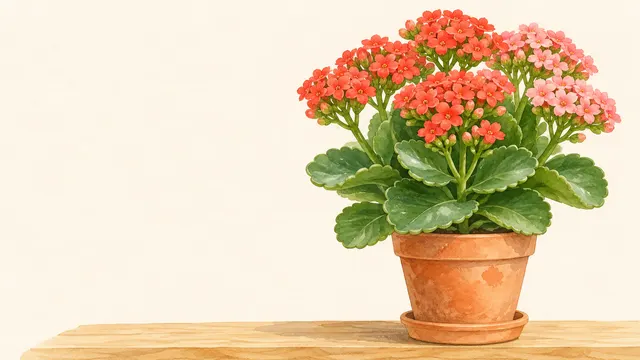
Kalanchoe Care: Light, Water, and Reblooming
Kalanchoe care for florist kalanchoe: bright light, soil that dries between waterings, and about 14 hours of nightly darkness for 6 weeks to bloom again.
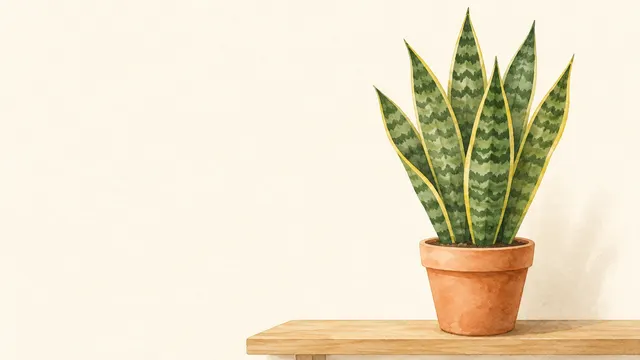
Snake Plant Care: Light, Water, and Common Mistakes
Snake plant care for beginners: bright indirect light, water only when the soil is dry (about every 2 to 6 weeks, less in winter), a snug pot, and rot traps.
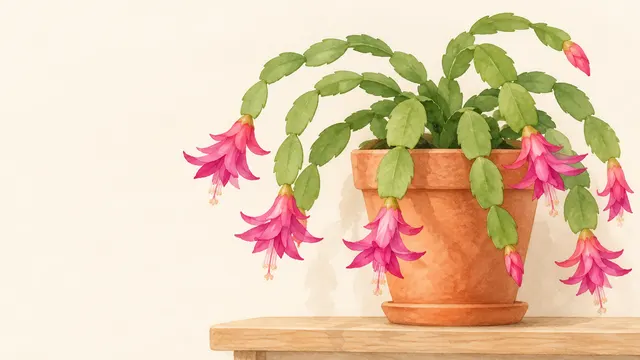
Christmas Cactus Care: How to Get It to Bloom
Christmas cactus care for beginners: tell it from a Thanksgiving cactus, water when the soil is nearly dry, and use cool, fully dark fall nights to set buds.