Jade Plant Care: Light, Water, Pruning, and Propagation
Quick Answer
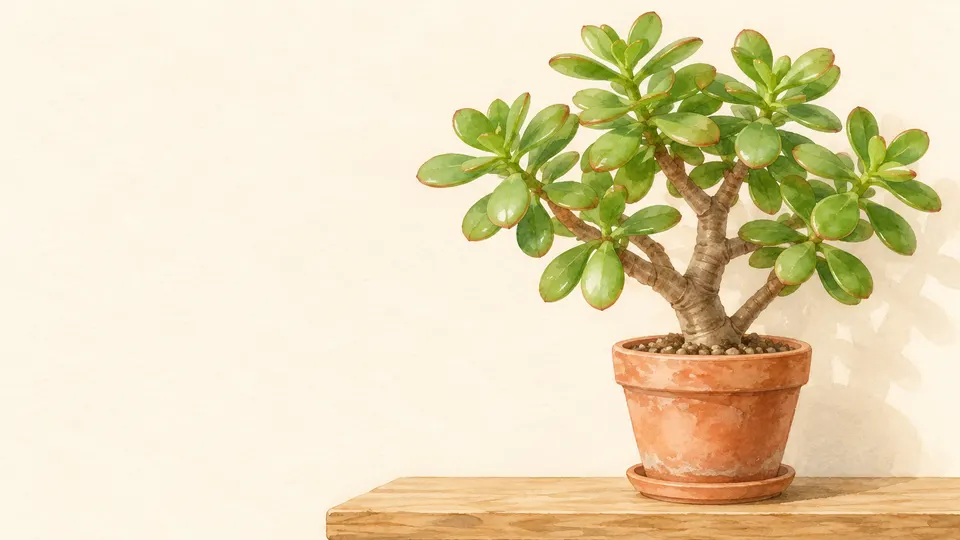
Give a jade plant (Crassula ovata) four or more hours of direct sun a day, such as a south-facing window. Water deeply, let the soil dry, and water less from fall through winter. Sources differ on how dry, so check the soil first. Use a fast-draining cactus mix in a pot with a drainage hole, and a heavy pot once it gets top-heavy. Prune in spring. The ASPCA lists jade as toxic to cats and dogs.
On this page
- Jade Plant Care at a Glance
- How Much Light Does a Jade Plant Need?
- How Often Should You Water a Jade Plant?
- Soil, Pots, Repotting, and Feeding
- How Do You Prune and Propagate a Jade Plant?
- Why Is My Jade Plant Dropping or Shriveling Leaves?
- Is a Jade Plant Toxic to Cats and Dogs?
- Frequently Asked Questions
- Our Take
- Sources
Key Takeaways
- Jade plants do best with four or more hours of direct sun. Red leaf edges are a sign of good light; all-green leaves and drooping stems point to too little.
- Water deeply, let the soil dry between waterings, and water less from fall through winter. Check the soil first; any day count is only a starting point.
- Use a fast-draining cactus or succulent mix and a pot with a drainage hole. Move a top-heavy plant into a large, heavy pot so it does not tip.
- Prune in spring back to a side branch or just above a ring. Stem cuttings root easily after the cut end dries for a few days, and whole leaves can root too.
- Leaf drop can mean too much water or too little, so check the soil before you water. The ASPCA lists jade plant as toxic to cats and dogs.
Jade Plant Care at a Glance
Jade plant (Crassula ovata) is still sometimes sold under older names such as Crassula argentea [1]. Its basic needs:
| Need | What the sources recommend | Source |
|---|---|---|
| Light | 4 or more hours of direct sun; a south-facing window | UW-Madison, Penn State, Clemson |
| Water | Let the soil dry between deep waterings; water less from fall through winter | UW-Madison, NC State, MBG |
| Soil | Fast-draining cactus or succulent mix | UW-Madison, Penn State, Clemson |
| Pot | Drainage hole; clay or terracotta dries faster; heavy pot for a top-heavy plant | Penn State, Clemson |
| Temperature | 65 to 75°F by day, 50 to 55°F at night | Clemson |
| Pruning | Spring, back to a side branch or just above a ring | UW-Madison, Penn State |
| Pets | ASPCA lists it as toxic to cats and dogs | ASPCA |
How Much Light Does a Jade Plant Need?
A jade plant does best with four or more hours of direct sun a day, such as in a south-facing window [1] [2] [3]. Missouri Botanical Garden gives the same minimum another way: at least 4 hours of direct sun or 12 hours of bright indirect light [5]. NC State adds some afternoon shade [4].
What Do Red Leaf Edges Mean?
Red edges are a light signal, not a disease. UW-Madison Extension says the leaves should be edged or tinged with red when the plant gets enough light [1], and NC State notes that the margins acquire a red tint in direct sun [4]. With too little light, UW-Madison describes deep green leaves and drooping stems [1], while Penn State describes light green leaves without the red edges [2]. A jade plant with all-green leaves and drooping stems may simply need more sun. UW-Madison says there is nothing else wrong with such a plant; it just lacks the light for compact growth and red coloring [1].
Grow Lights, Summer Outdoors, and Temperature
If no window is bright enough, Penn State suggests a full-spectrum grow light kept close to the plant, run for about 12 hours and then switched off, since a light placed too far away makes the plant stretch and turn leggy [2].
Summer outdoors. A potted jade can spend summer outside, but move it into stronger light gradually to prevent sunburn, and bring it in before the first frost [1] [2].
Temperature. Clemson recommends 65 to 75°F during the day and 50 to 55°F at night, and in winter it advises keeping plants out of drafts and not letting leaves touch cold windowpanes [3].
Will a Jade Plant Flower Indoors?
Sometimes, but not often. Penn State says jade typically will not flower indoors [2], and NC State says it rarely blooms as a houseplant [4]. Missouri Botanical Garden names two requirements: a mature plant, usually ten years old or older, and naturally shortening days [5]. The small white or pink star-shaped flowers form in response to long nights [1].
To encourage bloom, UW-Madison suggests withholding water in fall, keeping the plant cool (around 55°F, especially at night), and keeping it where it gets no supplemental light, so the naturally shortening days can trigger flower buds. Several weeks of cool, dry, dark treatment followed by regular watering should result in flowers [1]. After it flowers, Missouri Botanical Garden suggests letting it rest and resuming regular water and fertilizer when new growth appears [5].
How Often Should You Water a Jade Plant?
Water deeply, then let the soil dry before the next watering [1]. Sources differ on how dry. Penn State says to water only when the soil is completely dry [2]. UW-Madison allows liberal watering in spring and summer, with slight drying between waterings and no standing water [1]. Clemson suggests soil moist but not wet in spring and summer, drying between waterings in winter [3]. Missouri Botanical Garden suggests letting the top of the soil dry in spring and summer and watering less in fall [5].
Our editorial middle ground, not a rule from any one source: in spring and summer, water thoroughly once the top inch or two feels dry; from fall through winter, let the pot dry out much further before you water again.
Iowa State's test for succulents: push a chopstick into the soil, and if it comes out darker with moisture, wait [8].
How many days? University of Illinois Extension says succulents in general need water about every 2 to 3 weeks, and less in winter [6]. Treat that as a starting point only: season, light, and pot all change how fast the soil dries, so check the soil rather than the calendar. For a season-by-season schedule, see how often to water succulents.
Clemson advises against splashing water on the leaves [3]. Jade still needs water: UW-Madison and Clemson both warn that drought can cause dwarfing, spotted leaves, leaf drop, and death [1] [3].
Soil, Pots, Repotting, and Feeding
Use a fast-draining mix. UW-Madison recommends a well-drained, high-porosity mix made for succulents or cacti, or standard potting mix with extra perlite or sharp sand [1]. Clemson says a cactus mix with some added organic matter will do, or you can mix one part sterilized organic soil, one part sphagnum peat moss, and three parts coarse sand by volume [3]. For more recipes, see the best soil for succulents.
Choose the pot for weight as well as drainage. Any pot with a drainage hole works, but clay or terracotta lets the soil dry faster than glazed or plastic pots [2]. Jade plants grow heavy at the top. When an older jade becomes top-heavy, move it to a large, heavy pot so it does not tip over. [3]
Repotting. Jade can live for years while root-bound [3]. UW-Madison suggests repotting every 2 to 3 years, or sooner if the plant becomes top-heavy, as new growth starts. If it goes back into the same size pot, trim the roots and cut back the stems, then water sparingly until it settles in [1]. Clemson adds: let the soil dry after repotting [3].
Feeding. Sources differ:
| Source | How often to fertilize |
|---|---|
| UW-Madison | Every two months during active growth, or a dilute fertilizer more often |
| Clemson | Once every three to four months, with a liquid houseplant fertilizer |
| Penn State | Two to three times in spring and summer, with a balanced liquid houseplant fertilizer |
Sources: UW-Madison [1], Clemson [3], Penn State [2]. Penn State warns that too much fertilizer may make the plant leggy, and both Penn State and Clemson say to wait four months before feeding a freshly repotted plant [2] [3].
How Do You Prune and Propagate a Jade Plant?
Pruning and Shaping
Prune in spring [1] [2], using a clean, sharp blade [2]. UW-Madison says spring pruning back to a side branch keeps jade compact, and that pruning helps the trunk develop enough to support the heavy leaves and stems [1].
- Shape: cut stems back to a side branch or just above a ring [1] [2].
- Tidy: remove broken or crossed branches and damaged or yellowed leaves [2].
- Keep it bushy: pinch new tips about ⅛ inch above a leaf pair [2].
The cuts heal over in a few days, and new growth sprouts within a few weeks [1].
Propagating From Cuttings
UW-Madison calls jade especially easy to propagate from stem or leaf cuttings [1]. Cuttings root most easily in summer, though you can take them any time of year [1].
Stem cuttings:
- Cut a 3 to 6 inch piece of stem with clean, sharp pruners and remove the leaves from the lower half [7].
- Let the cut end dry and callus for several days, so it is less likely to rot [7] [1].
- Insert the cut end into fairly dry, well-drained soil [1], such as cactus potting soil or perlite [7].
- Pot it up once new roots form. Iowa State notes that most succulents do not root well in a glass of water [7].
Leaf cuttings: remove a whole leaf cleanly, including the base where it joins the stem; partial leaves will not root [7]. Lay it on slightly damp, well-drained mix with the base at the soil surface, keep the surface damp but not wet, and look for new roots and leaves in several weeks [7]. Iowa State lists Crassula among the succulents that grow well from both stem and leaf cuttings [7]. For propagation basics that apply to other succulents, see our guide to succulent care.
Why Is My Jade Plant Dropping or Shriveling Leaves?
Check the soil first. Leaf drop on a jade plant can come from too much water or too little, so the soil tells you which. UW-Madison says overwatering causes leaves to drop and the stem to rot, and that drought can also cause leaf drop [1]. Iowa State explains why this is confusing in succulents: root rot kills roots, so the plant drops or shrivels leaves as if it were dry, and adding more water makes it worse [8].
| What you see | Possible cause | What to do |
|---|---|---|
| Leaves drop; stem rots at the base | Overwatering and root rot [1] [4] [5] | Let the soil dry; if the base has rotted, take cuttings from firm upper stems [5] |
| Yellow, soft, mushy leaves and stems; damp soil | Overwatering [8] | Stop watering and let the soil dry thoroughly [8] |
| Wilted, discolored leaves; rubbery branches that may break off | Overwatering [5] | Water less, especially in winter [5] |
| Shriveled, wrinkled leaves that drop; dry soil | Too little water [8] [3] | Water deeply, then check the soil more often |
| A few lower leaves fall slowly on a healthy plant | Normal aging [1] | Nothing; remove fallen leaves |
| Leaves die after sunburn, insecticide damage, or frost | Leaf burn [1] | Avoid the cause; damaged leaves fall and new ones sprout [1] |
| Brown or tan patches after a sudden move into bright sun | Sun scald [8] | Change light gradually; burned areas will not recover [8] |
| Tiny white or black dots on otherwise healthy leaves | Hydathodes, the plant's water pores [2] | Nothing; Penn State says they are not a disease |
| No red edges; drooping or stretched stems | Too little light [1] [2] | Move to more direct sun |
What About Mealybugs and Other Pests?
Mealybugs are the most common insect pest of jade plants [3] [1]. They look like white, fluffy bits of cotton, attach where leaves join the stem, and can deform new growth [2] [1]. UW-Madison and Penn State describe wiping them off with a cotton swab dipped in rubbing alcohol, repeated until they are gone [1] [2]. Isolate the plant so the pests do not spread [8]. If you use a pesticide, choose one labeled for mealybugs on succulents and follow the label; UW-Madison cautions that insecticides can damage succulent leaves [1]. Spider mites, aphids, and scale can also turn up occasionally [4].
Is a Jade Plant Toxic to Cats and Dogs?
Yes, according to the ASPCA. The ASPCA lists jade plant, under the older name Crassula argentea, as toxic to dogs, cats, and horses. It lists the toxic principles as unknown and the clinical signs as vomiting, depression, and incoordination [9]. If you think your pet has eaten part of a jade plant, contact your veterinarian or the ASPCA Animal Poison Control Center right away. To compare other popular succulents, see our guide to succulent types.
Frequently Asked Questions
How often should I water a jade plant?
When the soil has dried, not on a fixed schedule. University of Illinois Extension says succulents in general need water about every 2 to 3 weeks, and less in winter. Adjust for season, light, and pot, and check the soil first. UW-Madison Extension recommends deep waterings with the soil drying between them, and restricted watering in winter.
Why are my jade plant's leaves falling off?
It can be a sign of too much water or too little. UW-Madison Extension says overwatering causes leaves to drop and the stem to rot, and drought can also cause leaf drop. A few lower leaves falling slowly is normal. Check whether the soil is wet or dry before you change anything.
Why do my jade plant's leaves have red edges?
Because the plant is getting plenty of light. UW-Madison Extension says jade leaves should be edged or tinged with red when grown with sufficient light, and NC State Extension notes the margins turn red in direct sun. A plant in low light stays green.
Can you grow a jade plant from a single leaf?
Yes. Iowa State Extension lists Crassula among succulents that grow from leaf cuttings. Remove the whole leaf cleanly, including the base, lay it on slightly damp, well-drained mix, and keep the surface damp but not wet. New roots and leaves form in several weeks.
Is a jade plant toxic to cats and dogs?
Yes. The ASPCA lists jade plant (as Crassula argentea) as toxic to dogs, cats, and horses, with unknown toxic principles and clinical signs of vomiting, depression, and incoordination. If your pet eats part of one, contact your veterinarian or the ASPCA Animal Poison Control Center right away.
Our Take
In our editorial view, the most useful habit for a jade plant is checking the soil before every watering. The sources we reviewed differ on how dry the soil should get in summer, from moist but not wet (Clemson) to completely dry (Penn State), but the ones that address seasons (UW-Madison, Clemson, Missouri Botanical Garden, NC State) all call for less water in fall or winter. Leaf drop can come from either extreme, so a quick finger or chopstick check is more reliable than a fixed schedule. We would also put a jade in the sunniest window available before trying fertilizer or a bigger pot. This is our opinion based on extension guidance, not a controlled test.
Sources
- Jade Plant, Crassula ovata. University of Wisconsin-Madison Extension (Susan Mahr; revised April 2025).
- Jade Plant, A No Fuss Houseplant. Penn State Extension (Denise D'Aurora, Master Gardener; updated December 8, 2023).
- Jade Plant. Clemson Cooperative Extension HGIC (Karen Russ, Al Pertuit; revised by Barbara H. Smith, October 2015).
- Crassula ovata. NC State Extension Gardener Plant Toolbox.
- How do I care for my jade plant?. Missouri Botanical Garden, Gardening Help FAQs.
- Did you forget to water your plants? Try low-maintenance succulents. University of Illinois Extension news release (Nancy Kreith, January 8, 2024).
- How to Propagate Succulents. Iowa State University Extension and Outreach (Aaron Steil; last reviewed August 2023).
- Common Problems and Issues of Succulents. Iowa State University Extension and Outreach (Aaron Steil; last reviewed August 2023).
- Jade Plant. ASPCA Toxic and Non-Toxic Plants.
Plant care advice is general guidance: adjust for your light, season and pot, and check the soil before you water. Pet toxicity follows the ASPCA list only; if a pet may have eaten part of a plant, contact your veterinarian or the ASPCA Animal Poison Control Center right away.Spotted an error? Tell us.
Related Guides
Succulent Care for Beginners
Succulent care for beginners: bright light, a soak-and-dry watering rhythm, gritty soil in a pot with drainage, and how to read wrinkled or mushy leaves.
How Often to Water Succulents
How often to water succulents: check about every 2 to 3 weeks, water only when dry several inches down, water less in winter, and tell rot from thirst.
The Best Soil for Succulents (and How to Mix Your Own)
Succulent soil guide: why regular potting soil stays too wet, how organic and mineral parts compare, four DIY recipes, the right pot, and when to repot.
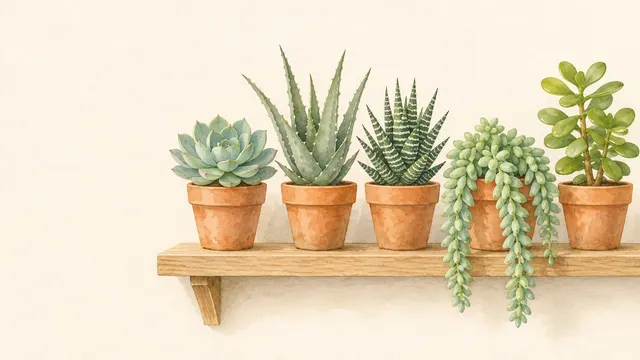
Types of Succulents: An Illustrated Guide
Types of succulents grouped by shape: rosette, upright, tree-like, trailing, flowering, and cacti, with current botanical names, light needs, and pet listings.
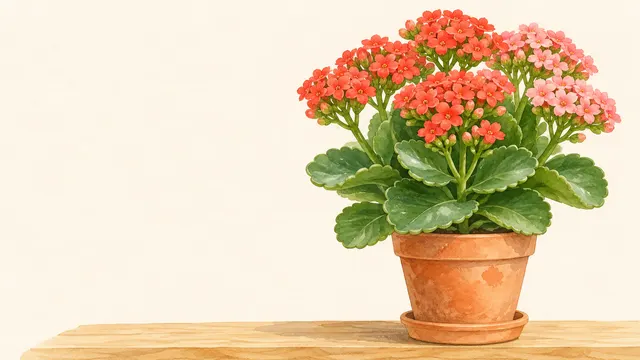
Kalanchoe Care: Light, Water, and Reblooming
Kalanchoe care for florist kalanchoe: bright light, soil that dries between waterings, and about 14 hours of nightly darkness for 6 weeks to bloom again.
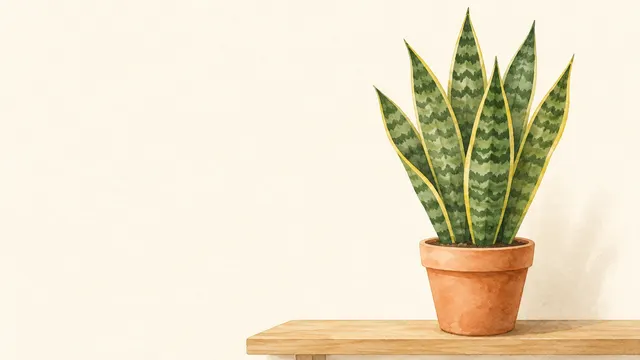
Snake Plant Care: Light, Water, and Common Mistakes
Snake plant care for beginners: bright indirect light, water only when the soil is dry (about every 2 to 6 weeks, less in winter), a snug pot, and rot traps.