Snake Plant Care: Light, Water, and Common Mistakes
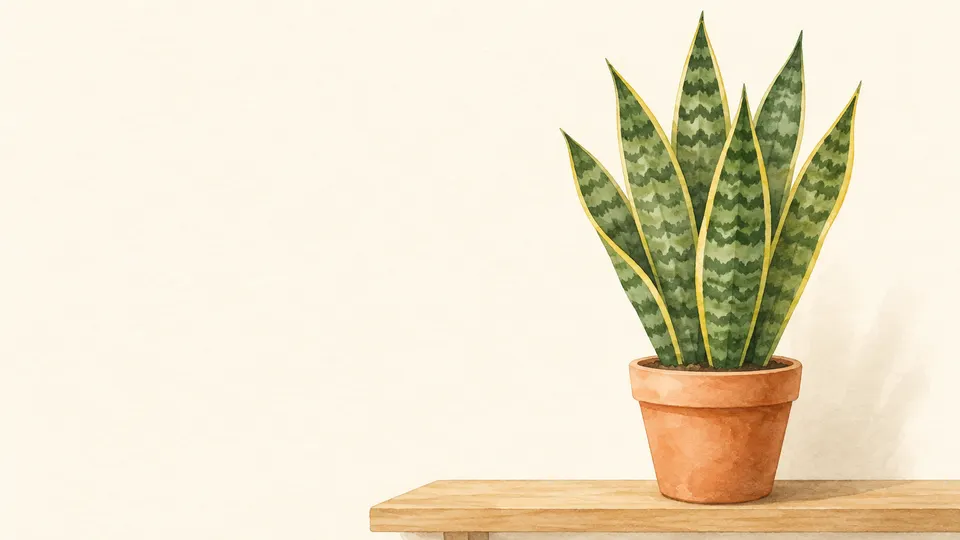
Quick Answer
Give a snake plant bright, indirect light, though it tolerates low light. Water only when the soil is dry, typically every 2 to 4 weeks in the growing season and every 4 to 6 weeks in fall and winter. Use a fast-draining cactus mix in a snug pot with drainage holes. Overwatering, which causes root rot, is the main problem to avoid.
On this page
Key Takeaways
- The snake plant is now Dracaena trifasciata, formerly Sansevieria trifasciata; you will see both names on labels.
- Bright, indirect light is ideal, but it tolerates low light. Avoid hot midday sun, which can burn the leaves.
- Water only when the soil is dry: roughly every 2 to 4 weeks in the growing season and 4 to 6 weeks in fall and winter.
- Use a fast-draining cactus mix and a snug pot with drainage holes. A pot that is too big stays wet and invites root rot.
- The ASPCA lists snake plant as toxic to cats and dogs.
What Is a Snake Plant?
A snake plant is a tough, long-lived succulent with stiff, sword-shaped leaves that store water [2] [4]. You will see it sold under two botanical names. Botanists moved it from Sansevieria into Dracaena after DNA analysis, so it is now Dracaena trifasciata, formerly Sansevieria trifasciata [1] [2] [3]. The RHS growing guide still uses the older name [4]. It is also called mother-in-law's tongue.
Snake plants mainly come from Africa, many from hot, dry habitats, which is why their fleshy leaves hold water and why they forgive missed waterings [4] [3]. Clemson Extension calls the snake plant a fantastic selection for beginners [1]. Indoors it rarely blooms, but mature plants occasionally produce tall spikes of fragrant white to greenish flowers [3] [5] [4].
| Type | What it looks like |
|---|---|
| Species (D. trifasciata) | Green leaves with darker, irregular horizontal bands; up to about 4 feet tall |
| 'Laurentii' | Banded leaves with bright yellow edges |
| 'Hahnii' (bird's nest snake plant) | Dwarf, funnel-shaped rosette about 6 inches tall |
| 'Moonshine' | Silvery-gray leaves with narrow dark green edges |
| 'Bantel's Sensation' | Narrow leaves with vertical white stripes; up to 36 inches |
| D. angolensis (formerly Sansevieria cylindrica) | Round, tubular leaves that end in a sharp tip |
Sources for the table: Penn State Extension and NC State Extension [2] [3].
How Much Light Does a Snake Plant Need?
Bright, indirect light is ideal [1] [2]. Snake plants also tolerate low light very well [2], but in low light they grow more slowly and need less water [1].
Avoid hot sun. Clemson warns that direct, hot sunlight can burn the leaves, and the RHS recommends keeping plants out of midday summer sun [1] [4]. Some gentler direct sun is fine: NC State suggests a spot with direct sun for only part of the day, about 2 to 6 hours, and the RHS says sansevierias thrive in sun or light shade [3] [4]. Penn State is more cautious and advises keeping it out of direct sun [2], so if you are unsure, start with bright, indirect light.
The RHS notes two more effects of light: plants in shade tend to grow taller leaves, and plants in sun may stay more compact [4]. If tall leaves in very low light start to flop, the RHS suggests supporting them with a wire hoop or canes and string [4]. To keep a snake plant from leaning toward the window, the RHS suggests turning the pot a quarter turn each time you water [4].
How Often Should You Water a Snake Plant?
Water only when the soil has dried out [2] [4]. Clemson Extension gives a typical rhythm: every 2 to 4 weeks during the growing season, and every 4 to 6 weeks in fall and winter [1]. NC State says that in winter, watering every one to two months is enough [3].
Those intervals are only a starting point. Clemson notes that the more light a plant gets, the more often it needs water, and plants in low light need less [1]. Pot size, potting mix, and room temperature matter too [4]. Push a finger into the soil before you water, rather than watering on a schedule. [4]
How to water [4]:
- Push a finger into the soil to check that it has dried out.
- Water the soil from above, avoiding the center of the leaf rosette.
- Let it drain, then pour away any water in the saucer so the plant does not sit in water.
Overwatering is the main problem to avoid. Clemson, Penn State, NC State, and the RHS all warn that too much water leads to root rot [1] [2] [3] [4]. Penn State puts it plainly: you can kill it by overwatering, but you can skip watering for a month or so and it will be no worse for wear [2]. For the same rule applied to other succulents, see our guide on how often to water succulents.
What Soil and Pot Does a Snake Plant Need?
Use a fast-draining mix. Penn State suggests a cactus potting mix or a mix with perlite [2]. The RHS recommends a free-draining cactus compost, or two parts loam-based potting compost to one part horticultural grit or fine gravel [4]. For more on mixes, see our guide to the best soil for succulents.
Pick the pot carefully [2] [4]:
- Drainage holes are a must. Without them, the soil stays soggy.
- Keep it snug. A pot much larger than the roots holds extra soil that stays wet and encourages root rot. Move up only one size.
- Use a heavy pot for tall plants. Tall leaves can tip a light pot over, especially when the soil is dry.
- Watch clay pots. A very root-bound snake plant can crack a clay pot.
Snake plants like a tight fit and need repotting only when roots fill the pot or start to bend it [4]. Penn State suggests fresh potting mix about every 5 years [2]. When you repot, you can also divide the plant; see how to propagate a snake plant.
Temperature, Humidity, Feeding, and Cleaning
Temperature. Typical room temperatures suit snake plants. The RHS gives about 60 to 75°F as ideal, and NC State notes the plant tolerates cool temperatures around 50°F [4] [3]. Keep it away from cold drafts and radiators [4]. Once it has been hardened off (moved outside gradually so it gets used to outdoor conditions), it can spend summer outdoors in a sunny or lightly shaded spot out of midday sun, but bring it in well before any frost [4].
Humidity. Low humidity is fine. The RHS advises never misting snake plants and keeping them out of steamy bathrooms, while giving them good air flow [4]. NC State and Clemson note they tolerate low humidity [3] [1].
Fertilizer. Feeding is optional but helps growth. The RHS suggests a liquid houseplant or cactus fertilizer once a month from about April to September, and Penn State suggests an all-purpose fertilizer at half strength monthly during the growing season [4] [2]. Skip feeding in winter, when growth slows [4].
Cleaning. Dust the leaves now and then [2]. If a leaf is damaged, cut it off at the base [2] [4]. Wear gloves, because the RHS notes that the sap can irritate skin [4].
Common Snake Plant Mistakes
Snake plants have few problems when they are kept on the dry side [4] [2]. Most trouble comes from a handful of avoidable mistakes:
| Mistake | Sign or risk | Fix |
|---|---|---|
| Watering on a schedule | Soggy leaves, wet soil, and root rot [1] [4] | Water only when the soil is dry; cut back in fall and winter |
| Pot too big or without drainage | Extra soil stays damp after watering, encouraging root rot [4] [2] | Snug pot with drainage holes and a cactus mix |
| Water poured into the rosette | The RHS advises keeping water out of the center of the rosette [4] | Water the soil, avoiding the center of the rosette |
| Hot midday summer sun | Burned or scorched leaves [1] [4] | Bright, indirect light; no midday summer sun |
| Cold drafts or frost | It tolerates cool rooms around 50°F, but it is a tender plant and should not face frost [3] [4] | Keep it away from cold drafts and bring it in well before frost |
| Ignoring pests | Mealybugs between leaf bases; spider mites in hot, dry air; collapsing leaves from vine weevil grubs [4] [3] | Inspect when you water; treat with a product labeled for the pest |
If the whole plant leans over, rather than an occasional leaf, the RHS advises checking for root rot [4]. When buying a snake plant, the RHS suggests choosing one with smooth leaves that are not wrinkled or puckered and a rosette firmly anchored in its pot [4]. For another sturdy foliage plant, see our ZZ plant care guide.
Is a Snake Plant Toxic to Cats and Dogs?
Yes. The ASPCA lists the snake plant as toxic to cats and dogs. Its toxic principles are saponins, and the clinical signs it lists are nausea, vomiting, and diarrhea [6]. Keep snake plants out of reach of pets and children. [4]
If you think your pet has eaten part of a snake plant, contact your veterinarian or the ASPCA Animal Poison Control Center right away. Our guides to spider plant care and orchid care each note how the ASPCA lists those plants.
Frequently Asked Questions
How often should I water a snake plant?
Only when the soil has dried out. Clemson Extension suggests about every 2 to 4 weeks in the growing season and every 4 to 6 weeks in fall and winter, and NC State says every one to two months is enough in winter. Plants in brighter light need water more often.
Can a snake plant grow in a dim room?
Yes, as long as the room gets some light. Snake plants tolerate low light well, but Clemson Extension notes they grow more slowly in low light and need less water. A spot with bright, indirect light is ideal.
Why is my snake plant falling over?
If a few tall leaves flop, low light may be the cause; the RHS suggests supporting them with a wire hoop or canes and string. If the whole plant leans, check for root rot, since overwatering is usually the main problem, according to the RHS. Tall plants can also tip a lightweight pot when the soil is dry, so Penn State Extension recommends a heavy pot. If it is simply bending toward the window, the RHS suggests turning the pot a quarter turn each time you water.
Do snake plants need fertilizer?
Not strictly. Feeding is optional, but it boosts growth. The RHS suggests a liquid houseplant or cactus fertilizer once a month from about April to September, and Penn State Extension suggests half-strength all-purpose fertilizer monthly in the growing season. Skip feeding in winter.
Is it Sansevieria or Dracaena?
Both names refer to the same plant. Botanists moved Sansevieria into Dracaena after DNA analysis, so it is now Dracaena trifasciata, but the RHS and many plant labels still use Sansevieria trifasciata.
Our Take
We think the snake plant earns its beginner reputation for a slightly unexpected reason: it rewards doing less. Clemson, Penn State, NC State, and the RHS all warn that overwatering leads to root rot, and Penn State notes it can go a month or so without water. In our view, the most useful habit is to treat the watering intervals as a reminder to check the soil, not a reminder to water. This is our editorial opinion based on extension and RHS guidance, not a test we ran.
Sources
- Exciting Houseplant Selections for Beginners. Clemson Cooperative Extension, Home & Garden Information Center (Julia Nichols, July 28, 2025).
- Snake Plant: A Forgiving, Low-maintenance Houseplant. Penn State Extension (updated September 20, 2023).
- Dracaena trifasciata (Snake Plant). NC State Extension Gardener Plant Toolbox.
- How to grow sansevierias. Royal Horticultural Society.
- A Houseplant Anyone Can Grow: Mother-In-Laws Tongue. University of Illinois Extension (Rhonda Ferree).
- Snake Plant. ASPCA Toxic and Non-Toxic Plants.
Plant care advice is general guidance: adjust for your light, season and pot, and check the soil before you water. Pet toxicity follows the ASPCA list only; if a pet may have eaten part of a plant, contact your veterinarian or the ASPCA Animal Poison Control Center right away.Spotted an error? Tell us.
Related Guides
How to Propagate a Snake Plant
How to propagate a snake plant by division, offsets, or leaf cuttings, step by step, and why leaf cuttings from variegated plants usually grow back all green.
ZZ Plant Care: Light, Water, Soil, and Yellow Leaves
ZZ plant care: bright indirect light (low light tolerated), water 1 to 2 times a month only once the mix dries, a coarse mix, and how to fix yellow leaves.
How Often to Water Succulents
How often to water succulents: check about every 2 to 3 weeks, water only when dry several inches down, water less in winter, and tell rot from thirst.
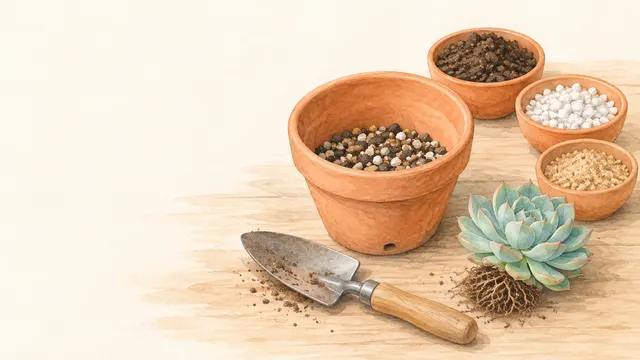
The Best Soil for Succulents (and How to Mix Your Own)
Succulent soil guide: why regular potting soil stays too wet, how organic and mineral parts compare, four DIY recipes, the right pot, and when to repot.
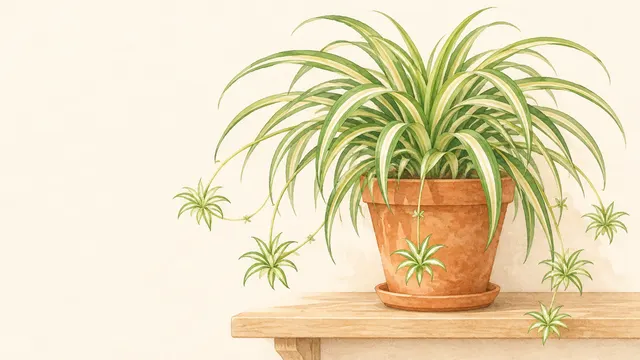
Spider Plant Care: Light, Water, and Baby Plants
Spider plant care made simple: bright, indirect light, water when the soil starts to dry, what causes brown leaf tips, and how to root the baby plantlets.
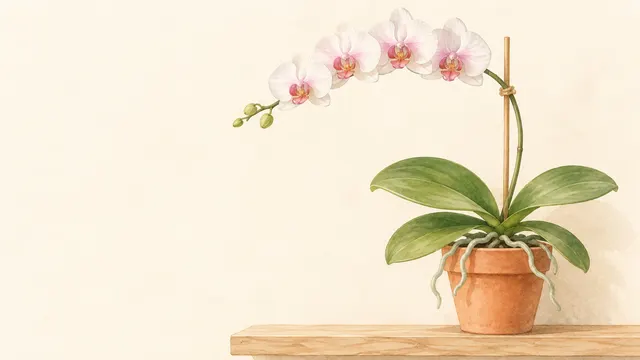
Orchid Care: How to Keep a Phalaenopsis Blooming
Moth orchid care for beginners: bright indirect light, a weekly soak in bark, the right temperatures, and how cool fall nights and spike pruning bring rebloom.